

By Rachel Waterhouse, Australian Shareholders’ Association
We have never had more investment information at our fingertips.
Company announcements arrive instantly. We can listen to fund managers on our phones, compare ETFs in minutes, follow investors on social media and ask an AI tool to analyse a company before breakfast.
Yet the latest ASX Australian Investor Study suggests the challenge has not disappeared. It has changed.
Australia now has 11.5 million investors outside superannuation and their primary home, and 29 per cent say knowing which information to trust is their leading investment challenge. Among investors aged 18 to 29, 24 per cent report using AI for investment advice.
That tells us something important. The advantage for investors is no longer simply having access to information. It is knowing what deserves your attention, your trust and what you can safely ignore.


Warren Buffett made a similar point more than three decades ago when he wrote that “what counts for most people in investing is not how much they know, but rather how realistically they define what they don’t know.”
That feels even more relevant today.
What is the source?
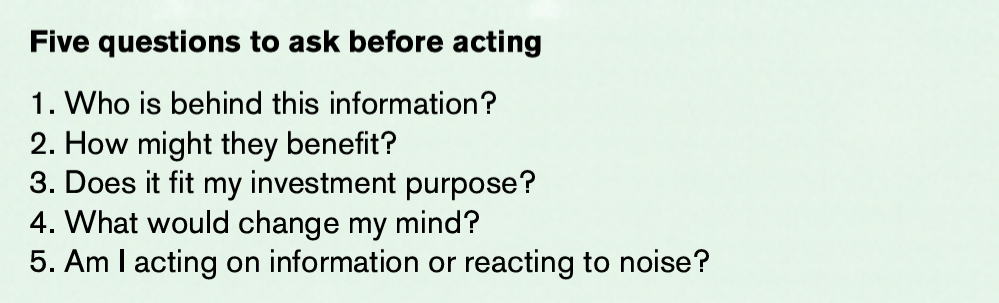
The first question I ask when I see an investment claim is simple: who is behind it?
Fund managers, brokers, financial advisers, media organisations and investment platforms can all provide useful information. But investors should understand the context.
What expertise does the person or organisation have? Is there evidence behind the claim? Can you check it elsewhere? How might they benefit if you act on it?
The same applies to social media. A confident opinion is not the same as evidence.
AI adds another layer. It can be useful for explaining concepts, comparing information and helping investors ask better questions.

Does it fit your purpose?
A good investment idea is not automatically a good investment for you.
Someone building wealth over decades may have very different priorities from someone relying on their portfolio for income.
Before acting on an idea, ask where it fits. Are you investing for growth, income, capital preservation or a mix? When might you need the money? What level of loss could you tolerate without feeling forced to sell?
These sound like basic questions, but they are easy to lose sight of when markets are moving quickly, or everyone seems to be talking about the same opportunity.
What would change your mind?
This is one of the most useful questions an investor can ask.
When we own an investment, it is natural to notice information that supports the decision we have already made. The longer we have held it, the easier it can become to defend it rather than reassess it.
So ask yourself: what would need to happen for me to change my view?
It might be a deterioration in the balance sheet, a change in management, weaker cash flow, increasing competition or simply a valuation that no longer makes sense.
You do not need to change your mind often. But you should know what evidence would make you reconsider.
Information or noise?
Investors are surrounded by reasons to act.
A share price jumps. A podcast names its next big idea. A social media post creates a sense that everyone else has already spotted an opportunity. An AI response presents a neat conclusion in seconds.
Urgency can feel like information, but it often is not.
Before acting, ask whether anything has actually changed in your investment case. If not, the best decision may be to do nothing.
Good investing is not measured by how frequently we act.
Confidence comes from process
Investor confidence should not come from believing we can predict what markets will do next.
It comes from having a plan, understanding why we own what we own, checking the quality of the information we rely on and being willing to challenge our assumptions.
This is also where investor communities can help. A good conversation should not tell you what to buy. It should expose you to a different perspective, test your thinking or prompt a question you had not considered.
At ASA, I see that regularly between investors with very different levels of experience. The value is not in everyone reaching the same conclusion. It is in asking better questions.
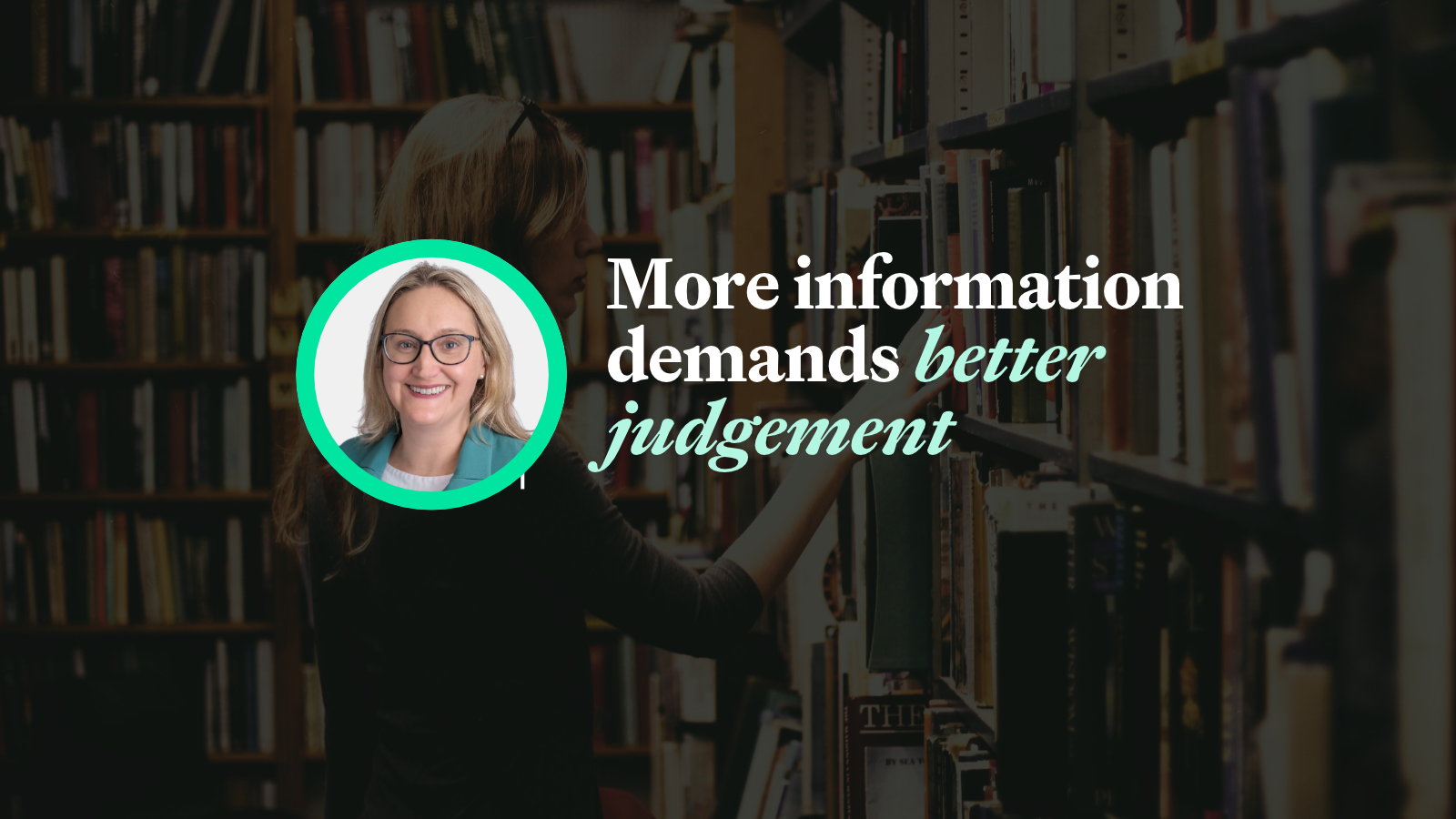
As information becomes easier to access and AI becomes more capable, human judgement matters more, not less.
In a world where information is almost unlimited, knowing what to trust, what matters and when to change your mind may be the most valuable investing skill we have.